


When you are first learning to shrimp, heading out to the docks or the boat with your MacDaddy Fishing Lights is an absolute blast. Nothing beats watching that net fill up with a solid pull. But as you gain more experience sorting through your catch, you’ll see some strange things from time to time. One issue every new angler needs to recognize right away is a condition known as cotton shrimp disease (also called milk or cooked shrimp disease). Let’s break down what it is, how to spot it, and what to do when you find it in your bucket.
Understanding Cotton Shrimp Disease: A Guide for New Shrimpers
What is Cotton Shrimp Disease?
Don’t let the name fool you—this isn’t a fungus or actual cotton growing on the shell. Cotton shrimp disease is actually caused by a microscopic parasite called a microsporidian. These tiny parasites enter the shrimp and target its muscle tissue, slowly replacing healthy muscle fibers with diseased tissue.
As the parasite takes over, it alters the muscle structure, turning it completely opaque. While it is a common topic of discussion among shrimpers in Florida and coastal areas, it is relatively rare in the grand scheme of your total catch. It can affect multiple species, but you will often notice it more clearly in white shrimp (blue/green tail) than in brown shrimp & pink shrimp (brown dot in the middle of the body).
How to Spot It in Your Bucket
When you cull your catch under sorting lights, healthy shrimp look clear, translucent, and lively. A shrimp with a heavy cotton infection sticks out like a sore thumb. When popping heads, hold it up to a light source; solid, light-blocking dark areas will appear if it’s diseased. Here is what you need to look for:

- The “Cooked” Appearance: The abdomen (the tail section) loses its clear look and turns a milky, chalky white. It literally looks like the shrimp has already been boiled or cooked right in the water.
- Cottony Masses: If you look closely through the shell, the flesh inside looks dense and stuffed, almost like a tightly packed cotton ball.
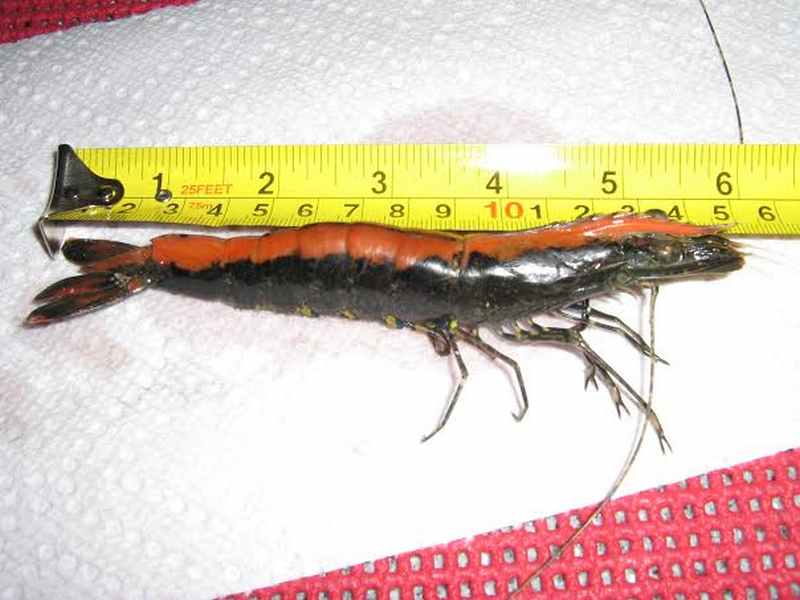
- Shell Discoloration: Sometimes, the shrimp’s immune system tries to fight back against the parasite. When this happens, you might notice strange blue-black or purplish bands and dark spots forming on the outer shell.
- Lethargic Behavior: Because their muscles are being destroyed, these shrimp can’t swim well. They will be weak, sluggish, or completely paralyzed compared to the hyperactive, snapping healthy shrimp in your bait well.

What Should You Do With Infected Shrimp?
Do not eat them. While these microscopic parasites generally do not infect humans, heavily infected shrimp are considered completely unmarketable and inedible. The meat becomes mushy, loses its flavor, and is unappealing on your dinner table.
If you find a “cottoned” shrimp while sorting your catch, the best practice is to separate it from the rest of your bucket immediately. Do not keep it with your fresh, healthy shrimp. DO NOT THROW IT BACK INTO THE ECOSYSTEM. Check local wildlife guidelines from agencies like the Florida Fish and Wildlife Conservation Commission (FWC) to see whether they are currently tracking local outbreaks, as public alerts can help researchers monitor the health of our wild shrimp stocks.
Keep your lights bright, your nets ready, and always watch for anything that doesn’t look quite right in the water.

Other Strange Things You Might Find in Your Net
While you are out in the Edgewater and Oak Hill zones, cotton shrimp isn’t the only oddity you might pull up. Keep an eye out for these other common shrimp abnormalities:
- Black Spot (Shell Disease): If you see distinct, pitted black spots on the shell that look like small burns, this is usually “shell disease.” Natural bacteria eat away at the shell’s chitin, often after a minor injury or missed molt. If the spots are just on the shell and the meat underneath is clear, it is usually safe to eat after peeling, but always trust your gut—if the meat looks or smells bad, toss it in your garden as nutrition but NOT back into the water.
- The “Orange” Shrimp: Every once in a while, you will pull up a shrimp with a bright orange head or an overall orange hue. This is usually a female carrying a massive batch of eggs inside her body, or it’s a shrimp that has been feeding heavily on specific colorful microalgae in the lagoon.
- Deformed Horns (Rostrums): You might catch a shrimp with a bent, wavy, or completely missing head spine (rostrum). This isn’t a disease; it’s almost always just a “bad molt” where the shrimp got stuck or injured while shedding its old shell.
- Asian Tiger Shrimp: The Asian tiger shrimp, scientifically named Penaeus monodon and commonly known by the slang name giant tiger prawn, is an aggressive invader in Florida’s coastal waters. The species was first introduced to the U.S. Atlantic coast following a 1988 accidental release of thousands of captive shrimp from a South Carolina aquaculture laboratory. This massive species can grow up to 13 inches long and weigh over a quarter-pound, making it up to three times larger than native species. While they make for excellent eating with a firm, sweet flavor similar to lobster tail, they pose a severe ecological threat by transmitting devastating pathogens like White Spot Syndrome Virus (WSSV) and Yellow Head Virus to native marine life; fortunately, these viral diseases cannot be transmitted to humans
and pose absolutely no risk to human health.
NOTE – If you catch an Asian Tiger Shrimp, submit your sighting directly to the Florida Fish and Wildlife Conservation Commission (FWC) Nonnative Species Reporting Portal or call the FWC Exotic Species Hotline (1-888-IVE-GOT-1).