

By: Capt. Lee Noga, MacDaddyFishingLights.com
If you want to catch shrimp at night in Florida, you’re in the right place. This guide is built from 20+ years of field research conducted by Capt. Lee Noga of MacDaddy Fishing Lights®, the most patented, most field-tested shrimping light system in Florida. By the end, you’ll know exactly what gear you need, how to set it up, and how to read the water so you can limit out on your first serious trip. Science is the biggest game-changer in the sport and has changed everything about catching shrimp in Florida.

Why Catching Shrimp in Oak Hill/Edgwater (tidal water) Requires 3 Important Things.
Florida shrimp brown, pink, and white (white shrimp also love to run in daylight) are largely nocturnal feeders. As daylight fades and water temperatures cool slightly after sunset, shrimp migrate from deeper daytime holding areas into the shallow estuary systems where you can intercept them with a dip net or cast net. You can catch shrimp with a cast net in the shallows around Titusville Pier (day or night), but night shrimping is mostly done with a 30″ round, 8-foot handle dip net. Night shrimping in Florida is productive precisely because this migration is predictable, repeatable, and tied directly to the tidal cycle in Volusia County. Tidal water plays a big role in catching shrimp.
The key to catching shrimp at night in Florida (tidal Volusia County) is understanding three things: the tide, the light deployment, and the net. Get all three right, and you’re on your way to filling your bucket (when the shrimp are running). Get one wrong, and you’ll wonder why your neighbor is scooping while you’re waiting.

To Catch Shrimp At Titusville Pier You Need To Get Your Spot Early
To catch shrimp in Titusville (wind-driven), you need a boat, or you can go to Titusville Pier. You need lights, a long-handle bridge net (2-piece), and a way to power your fishing lights. The pier has electricity, but the bumps and blackout surges can damage your light. Purchase a surge protector. Some people buy a pigtail adapter to convert the power receptacle to 120v; Ace Hardware knows exactly what you need. Call them.
What You Need: The Complete Gear List
1. To Catch Shrimp You Need A Submersible Shrimping Light
This is the most critical piece of gear for night shrimping in Florida. Deploying a submersible light below the surface at the precise depth creates a stable, circular illumination field. While the old school thought any waterproof bulb would do, the game changed in 2016 when research proved you must set the light vertically using a patented formula: Depth – 8 = X.
To catch shrimp, you must deploy your light correctly; follow these steps:
- Calculate your depth: If you are in 12 feet of water, the formula is 12 – 8 = 4. Your X is 4.
- Measure the rope: Start at your anchor weight, count up the rope 4 feet, and attach your clip to the anchor line
- Deploy the light: Drop the system into the water.
- Monitor the water column: If you can clearly see grass, debris, and bait passing through, your light is set.
- Adjust for clarity: If you cannot clearly mark this activity, pull the light in, move your clip up the rope 6 inches, and redeploy. Repeat a few inches at a time until the field is perfectly clear.
- Plan for the tide: Always sink the light as low as possible at the start of the tide. Knowing the outgoing tide will drop the water level by 1 to 2 feet, this prevents a thick layer of “blackwater” from forming above the light, allowing the ecosystem to thrive.
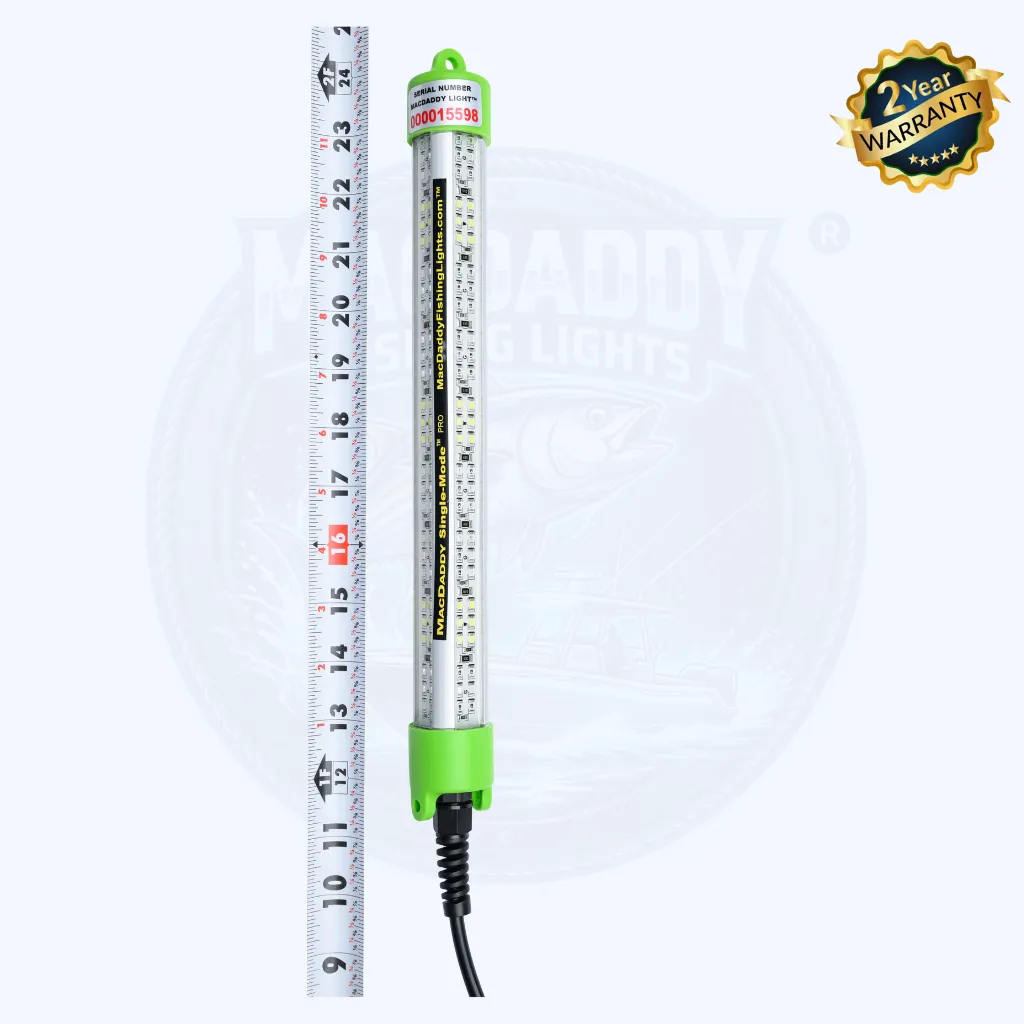
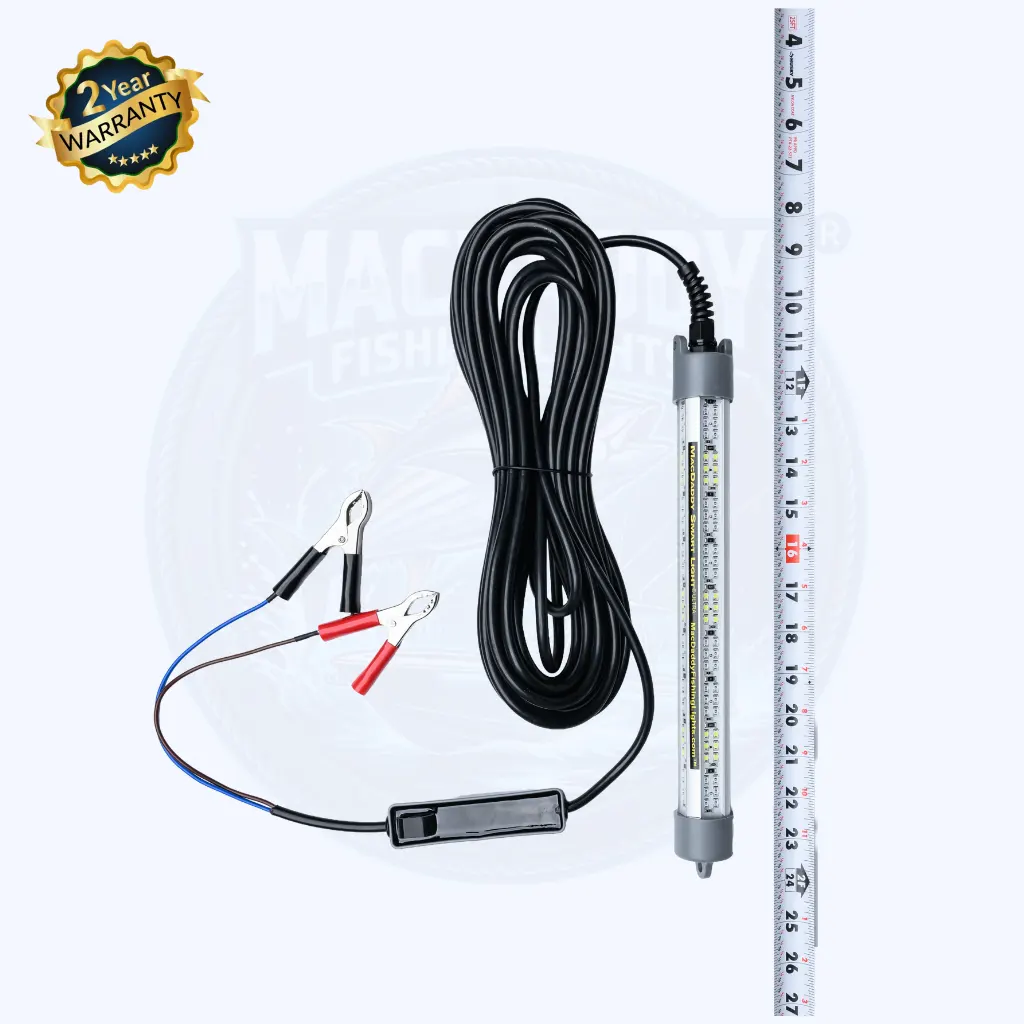
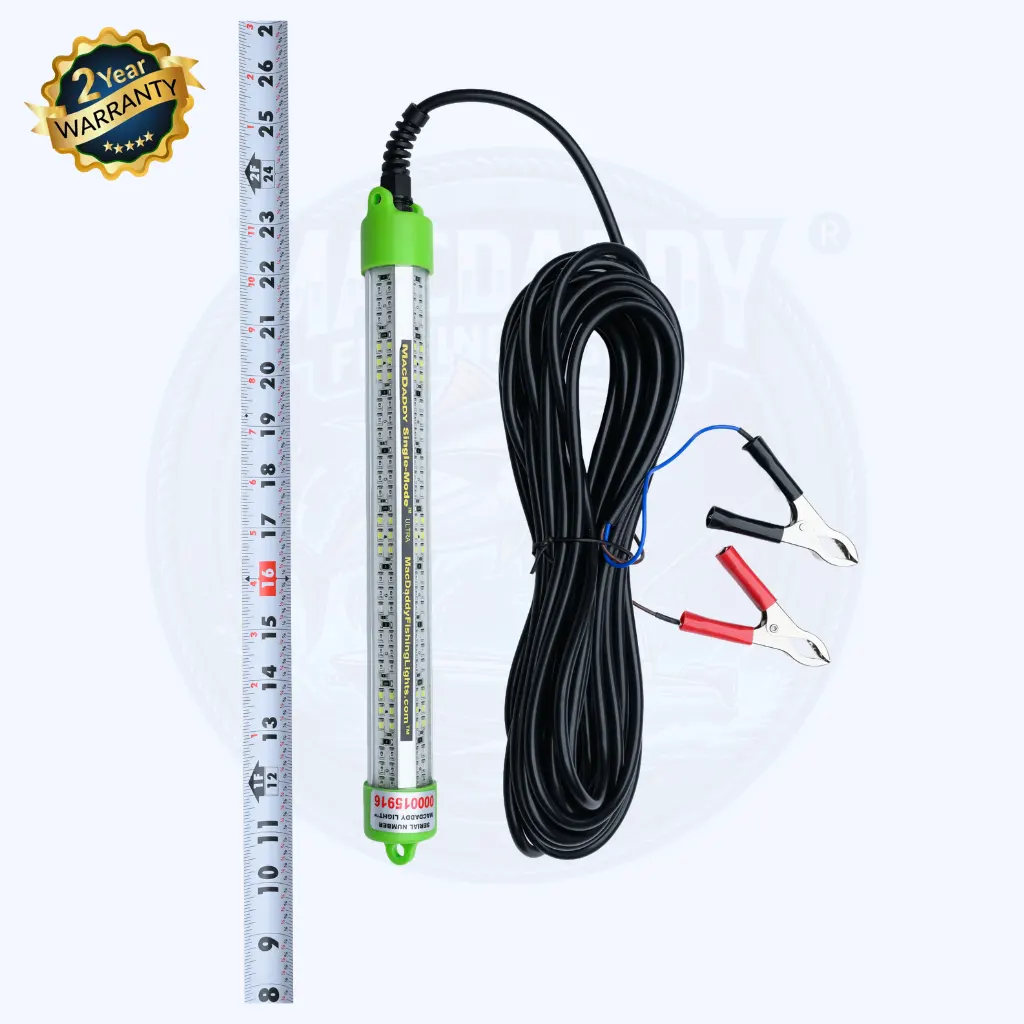
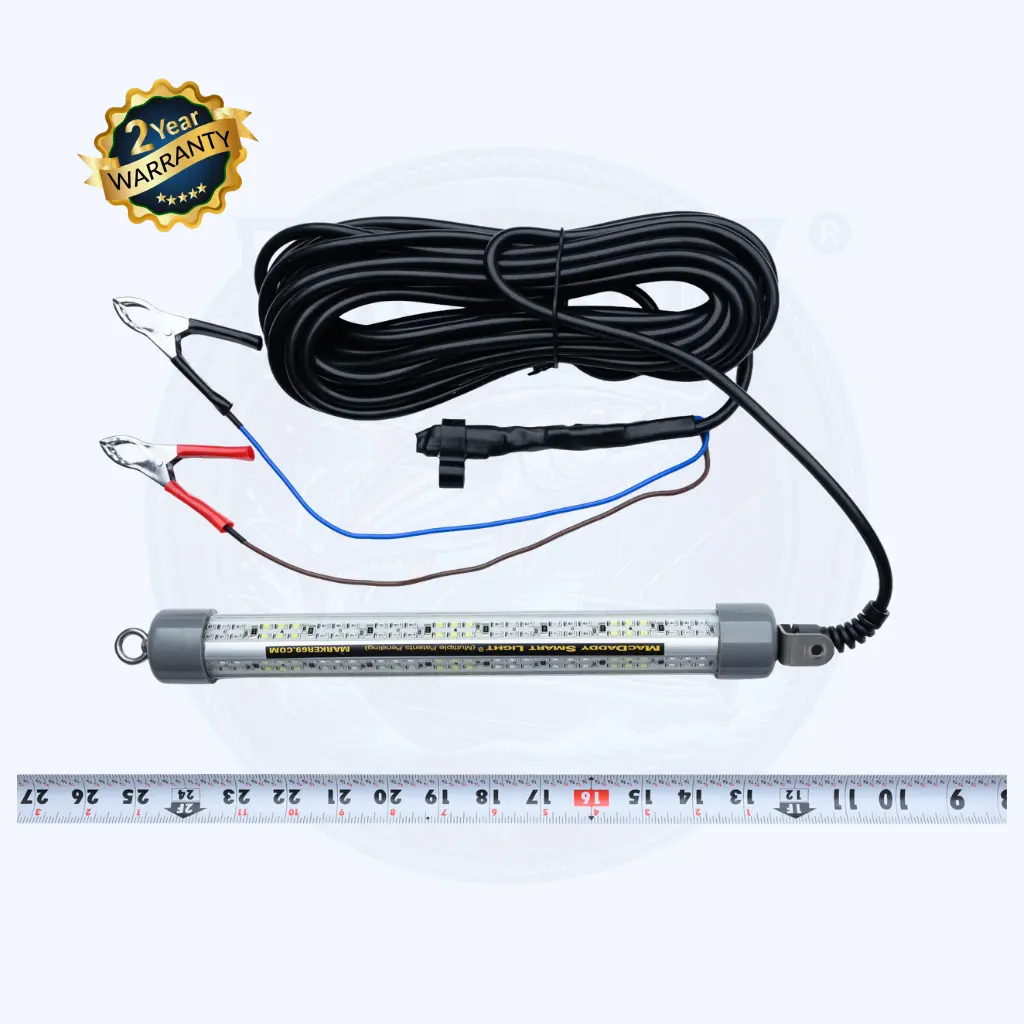
The MacDaddy Fishing Lights® system was specifically engineered for Florida tidal fishing & shrimping. We are the only light built to catch both light-tolerant and light-intolerant species (shrimp, squid, redfish, snook, tarpon, crappie, largemouth bass, etc.). The Single Mode Light™ is the most straightforward option for beginners; the Smart Light® Series adds programmable modes, including a patented frequency strobe that breaks up bait blackouts, one of the most frustrating problems in night shrimping. BOTH lights deliver the science that delivers (anchoring, depth control, fish manipulation using multiple lights). This organized, science-based approach is how to catch shrimp at night
2. A Dip Net
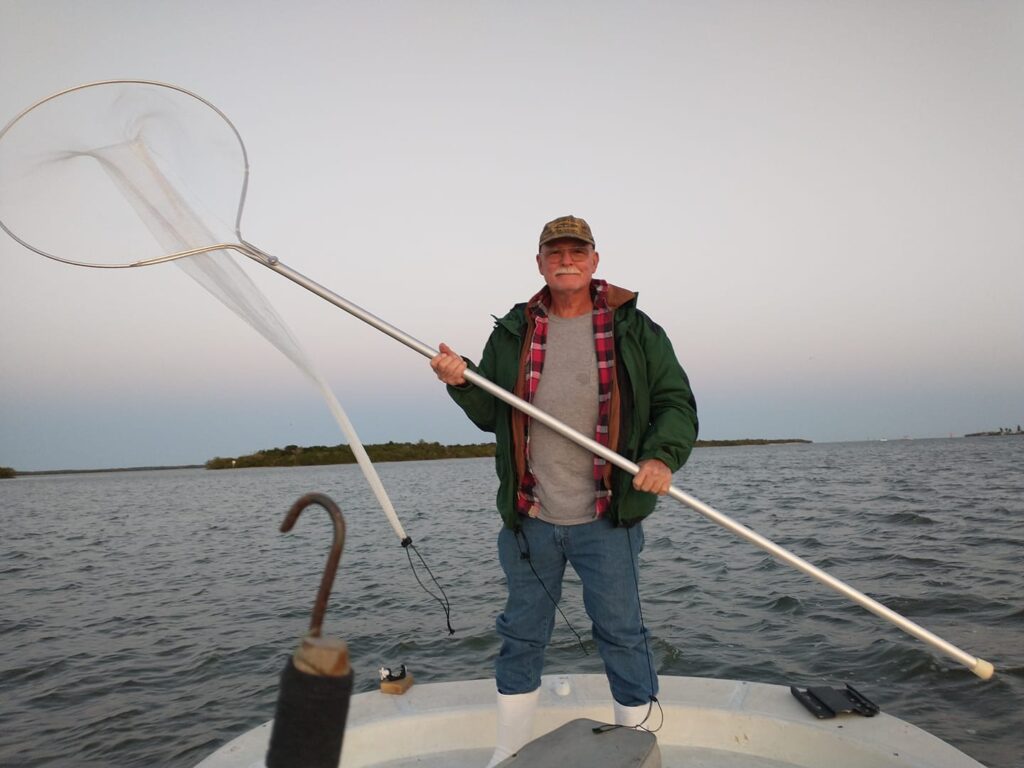
A dip net with 3/8-inch mesh is the standard tool for night shrimping in Florida’s tidal systems. Florida FWC regulations require a maximum perimeter of 96 inches (8 feet). A longer handle 8 to 10 feet gives you better reach when shrimp are stacked just outside arm’s length of the boat or dock. Bring 4-inch cable ties to repair any mesh rips on the water.
3. A 12V Marine Battery
Your shrimping light runs off a 12V battery. For a single light under 6,000 lumens, a 675-crank-amp tractor or marine battery is sufficient. For two lights or the MacDaddy ULTRA Series, use a 1,000-crank-amp battery to ensure full power throughout the session.
4. A Valid Florida Saltwater Fishing License
All recreational shrimping in Florida requires a valid Florida saltwater fishing license. The bag limit is five gallons of shrimp per vessel per day, not per person. Check current FWC regulations before every trip, as seasonal rules can vary by waterway and species.
- Dip net: 96-inch maximum perimeter, 3/8-inch mesh
- 12V marine or tractor battery with battery clips
- Submersible shrimping light with anchor attachment
- 5-gallon bucket for harvest
- Headlamp for dock/deck navigation (separate from your fishing light)
- Bug spray: Florida tidal waterways at night are notorious
- Tide chart for your specific waterway
- Valid Florida saltwater fishing license
- Cable ties for net repairs

The Most Important Variable: The Tide
Before any trip, pull the tide chart for your specific waterway. In Central Florida, the Intracoastal Waterway, the Indian River Lagoon, and Mosquito Lagoon all have predictable tidal patterns. The most productive window for catching shrimp at night in Florida is the outgoing (falling) tide. As tidal water drains from the shallow estuaries back toward the ICW and open water, shrimp travel with the current, bringing them right to your light.
The first two hours of the outgoing tide are typically the most productive window. Plan to have your lights in the water and cycling at least 30–45 minutes before the outgoing tide begins. This gives the light time to establish the plankton-baitfish-shrimp food chain cycle, which takes 15–45 minutes to build from scratch.
- Outgoing tide: the primary productive window; shrimp travel with current toward the ICW
- Full outgoing to low tide: keep fishing; shrimp continue moving through
- Dead low tide: activity slows; use this time to reposition or take a break
- Incoming tide: a brief secondary window at the start of the season only
- New moon / dark nights: typically produce better results than full moon nights
How To Set Up A Fishing Light – MacDaddy Proved The Science Of Night Fishing
Backed by nine distinct patents, MacDaddy Fishing Lights discovered that true angling success doesn’t come from disrupting the aquatic ecosystem—it comes from integrating with it. Their advanced technology blends light seamlessly into the underwater environment, giving you the visibility you need to hunt effectively without ever spooking the marine life. This discovery is “stealth mode”.

Deploying Your Light in “Stealth Mode” (The Depth-8 Formula)
To achieve true stealth mode on the water, deploy your underwater light strategically. Every MacDaddy Fishing Light features a dedicated rigging setup: a rope and anchor system attached directly to the bottom of the light, alongside a heavy-duty longline clip.
To activate Stealth Mode, use the simple Depth-8 Formula to calculate exactly where your light needs to sit in the water column:

The Formula: Total Depth – 8 = Your Clip Placement
Executing the formula creates UNLIT water above your light where marine life will choose to go. They remain calm and thriving. YOU see them; they DO NOT see you. This is called MacDaddy stealth mode: it backlights targets without lighting their private sanctuary above the light.
If you are fishing or shrimping in 15 feet of water, subtract 8 from your total depth: MacDaddy Stealth Mode Formula —–> Depth(15 feet)-8=7 feet
How to Catch Shrimp Rigging Light At Perfect Depth To Create Stealth Mode:
- Locate your anchor at the bottom of the rope.
- Formula – Depth(15 feet)-8=7 feet —–>Touch weight count up rope Measure 7 feet up
- Attach your longline clip right at that 7-foot mark.
Why Stealth Mode Works
By clipping the light 7 feet from the bottom in 15 feet of water, you leave exactly 8 feet of unlit, dark water completely above your light.
This brilliant positioning leaves the upper ecosystem completely undisturbed. Marine life above the light exhibits zero signs of stress, threat, or spooking. Instead, the underwater beam perfectly backlights your targets, allowing you to see everything passing through the water column while your boat bottom and your presence remain completely invisible from below. We do this with 3000 to 6000 lumens max. Anything more is reckless in Central Florida. We are backlighting the marine life, NOT lighting up New York City.
Anchoring Diagram Showing Your MacDaddy in Stealth Mode: You Get 2x Larger Strike Zone!

In moving tidal water, an unanchored light drifts with the current and disperses the shrimp aggregation you just spent 30 minutes building. MacDaddy Fishing Lights was invented by a legendary female Boat Captain, Capt. Lee Noga. Her techniques and teachings have mentored over 150K people. MacDaddy Fishing Lights was born in Florida, where a decade of focus group testing took place. If it’s not a MacDaddy Fishing Light, you will be limited to a cord-type light with no instructions or training programs.
Lastly, A 7–8 lb anchor weight attached to the bottom clip of your shrimping light holds it in a fixed, stable position. MacDaddy’s patented anchor attachment system is designed specifically for this purpose in tidal conditions.
Two-Three Lights Are Better Than One
Experienced Florida shrimpers almost always deploy two lights. A single light creates a point of attraction. Two lights create a field, a corridor of light pressure that guides shrimp toward the center where you are netting. For a two-person boat operation, position one light on each side of the boat, staggered fore and aft, to create a shrimp funnel between them.


What to Do When Shrimp Appear
Once shrimp begin appearing in the light field, usually 15 to 45 minutes after deployment, move slowly. Sudden movements above the water will spook them. Lower your dip net slowly and sweep in a smooth, even arc through the light zone. Lift quickly and deposit into your bucket. The shrimp will continue returning to the light, so there is no need to rush.
If shrimp disappear suddenly, look for a bait blackout: a dense school of baitfish crowding the light so heavily that shrimp cannot access it. If you’re using the MacDaddy Smart Light®, activate the frequency strobe mode for 30–60 seconds to break up the bait pod. Shrimp will return once the baitfish scatter.
Best Locations To Catch Shrimp in Central Florida
- Indian River Lagoon: vast estuary system with multiple depth zones and strong tidal flow
- Mosquito Lagoon shallows (only with navigation experience), treacherous at night in flats; catch shrimp in intercoastal, super highway of activity Dec to May.
- St. Johns River (Northeast FL) brown and white shrimp run actively in fall
- Matanzas River / St. Augustine excellent tidal shrimping with strong current
- Volusia County ICW consistently productive, especially September through December; cast netting North Port Orange pier to Flagler Bridge
Florida Shrimping Regulations: What You Need to Know
Always check current FWC regulations before heading out. Key rules for recreational shrimping in Florida: 5-gallon bag limit per vessel per day; dip net maximum 96-inch perimeter; cast net maximum 14-foot stretched length; valid Florida saltwater fishing license required for all anglers 16 and over. Some waterways have seasonal restrictions; verify your specific location on the FWC website before every trip
Popular Channel Markers To Catch Shrimp; Correlate To The Tide Charts On MacDaddyFishingLights.com

The TIDE is KING In Volusia County To Catch Shrimp
You must learn: there are 4 tides a day, (2) incoming tides, (2) outgoing tides; some days only have 3 tides. The moon has 100% influence over the tides’ strength and weaknesses. Based on the moon cycle, Capt Lee Noga believes there are 10 days a month worth considering. Using the moon cycle to choose your night is the biggest advantage of all besides the type of fishing lights you use.
Moon Cycle Need-to-Know Facts To Catch Shrimp:

To catch shrimp – Timing the Tide: The Moon Cycles That Control the Shrimp Run
To maximize your time on the water, sync your calendar with the night sky. The most reliable rule of thumb is simple: plan your trips 3 days before and 2 days after a New or Full Moon.
If you look at the tracking diagram, the plus (+) signs indicate the days the moon is building strength as it leads up to a Full or New Moon. This “building moon” phase occurs twice a month, and it is your prime window for action. Shrimp love to ride a heavy current, and these building moons provide the strong tidal movement they need to migrate.
Conversely, the minus (-) signs show the moon’s gravitational pull weakening, reaching its absolute lowest energy during a half moon. When you see those weak, sluggish tides on the chart, save your gas and stay home. Slack water is simply not the time to catch shrimp.
Recommended Article:
Important Links
- The Science-Backed Difference: Developed by award-winning Pro Angler Capt. Lee Noga, these premium lighting tools utilize stealth backlighting principles protected by 9 U.S. utility and design patents. Unlike cheap “lamp on a string” retail toys that over-illuminate and spook targets, MacDaddy systems let anglers consistently manipulate target depth and catch light-sensitive nocturnal species.
- Technical Support & Community: For product setups, custom wiring guides, and troubleshooting steps (such as checking magnetic button pins or battery alignment), access the official MacDaddy Technical Support Desk.
- Join the Academy: Connect with over 27,000 active night anglers (MacDaddy focus research group), share catch reports, and master regional tidal math by visiting the Florida Shrimping Academy Facebook Group.
- Masterclass Video Education: Scan and view over twenty years of field research and step-by-step assembly guides directly on the MacDaddy YouTube Training Portal.
- Manufacturing Disclaimer: Products evolve continuously over time based on live field telemetry. Finished items may vary slightly from early website or catalog image assets.
- Environmental & Sourcing Notice: Engineered proudly in the USA; assembled utilizing global components. Please remember to recycle responsibly and support green coastal ecosystem guidelines.
This phenomenon usually begins in late March when the dinks show up and carpet the top water. We see this as a bonus to dip for maybe 1 more hour; you cannot make a night of it.
Ultimately, these tips and insights will enhance your Shrimping Central Florida experience and help ensure a successful, enjoyable outing.
Discover the Joy of Shrimping Central Florida: A New Adventure Awaits:
Hang Out With Capt. Lee Noga Resources:
Join a 26k member Facebook forum of people who have mastered how to shrimp Central Florida. Members post their reports and share images of the hunt. Click -> Florida Shrimping Academy With Capt. Lee Noga
Visit Capt. Lee Noga on her YouTube channel (@leenoga). Click Here
→ Shop MacDaddy Shrimping Lights
→ Download Capt. Lee Noga’s Free Light Strategies Manual
→ Join the Florida Shrimping Academy — 27,000+ Members