
Why Learning How to Set Up Fishing Lights for Shrimping Changes Everything
Knowing how to set up fishing lights for shrimping is the single biggest variable separating anglers who consistently limit out from those who go home empty. Most shrimpers treat their light as a simple drop-in tool, toss it overboard, wait, and hope. Capt. Lee Noga of MacDaddy Fishing Lights® spent 15+ years proving that approach wrong. Strategy, depth control, positioning, and timing are not optional. They are the sport.
This 9-step guide is built entirely from Capt. Noga’s published research, the same research that earned MacDaddy Fishing Lights® 9 U.S. patents and made it Florida’s best-selling submersible shrimping light.
Why the Right Shrimping Light Is the Foundation
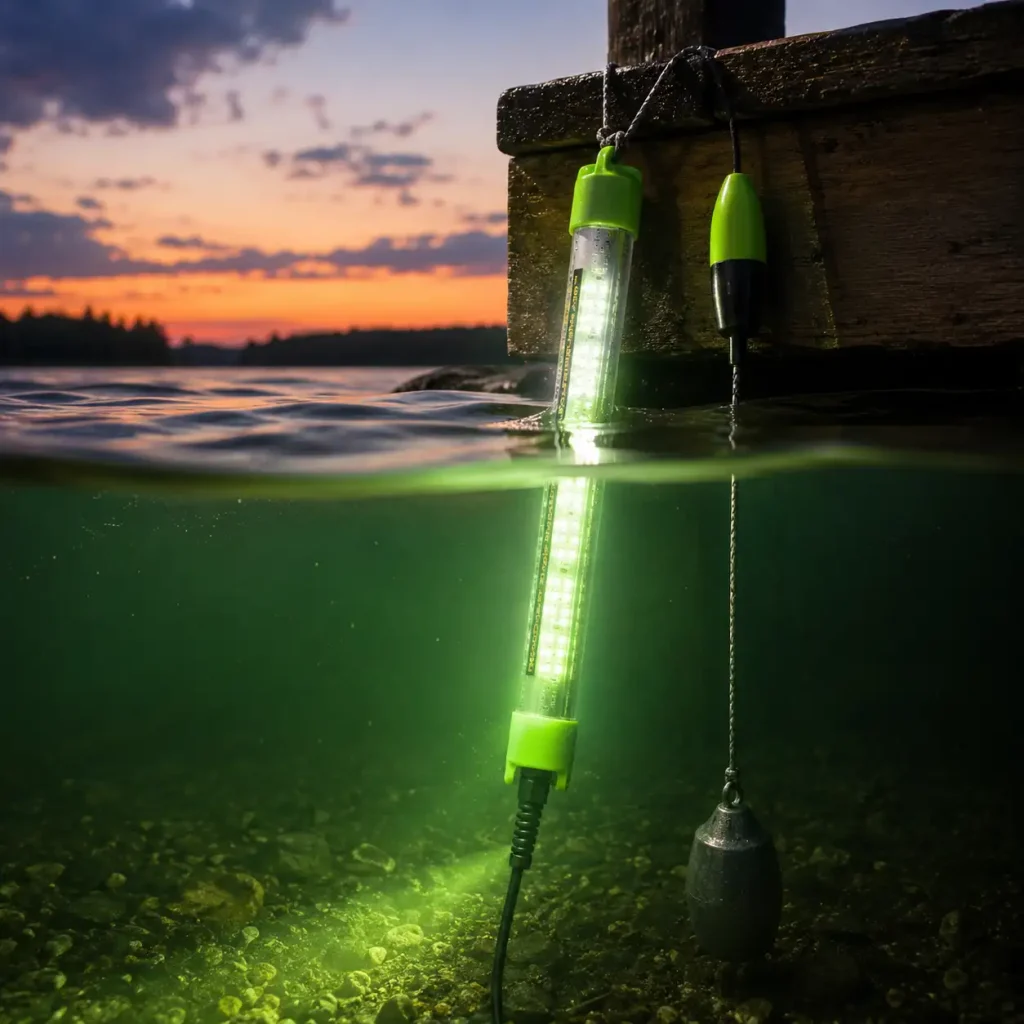
Before covering setup, the light itself must meet a minimum standard. Not every fishing light can function as a shrimping light. A shrimping light requires: vertical orientation in the water column, a depth-control system, a weighted anchor attachment, and adequate lumen output (1,800–6,000 lumens after housing loss). If the light you are using lacks any of these features, no amount of strategy will compensate. This is why understanding how to set up fishing lights for shrimping starts with equipment, not technique.
MacDaddy Fishing Lights® offers two product lines for shrimping. The Single Mode Light™ (PRO and ULTRA) provides reliable single-mode performance with full anchoring and depth control. The Smart Light® Series adds 7–8 programmable modes, including the patented frequency strobe that is essential for breaking up bait blackouts during peak shrimping season.
Step 1 – Choose Your Location
The first step in setting up fishing lights for shrimping is selecting the right water. Shrimp move with the tide, specifically the outgoing tide at night. Target tidal rivers, ICW channels, and estuarine systems where tidal flow is present. In Central Florida, the productive depth range is typically 10–15 feet in the Intracoastal Waterway.
Best locations for shrimping light deployment:
- Near drop-offs where water deepens gradually
- Edges of submerged sandbars
- Wind-driven and tidal bridge areas
- Shallow tidal cuts in saltwater rivers
Step 2 – Position Your Light Correctly
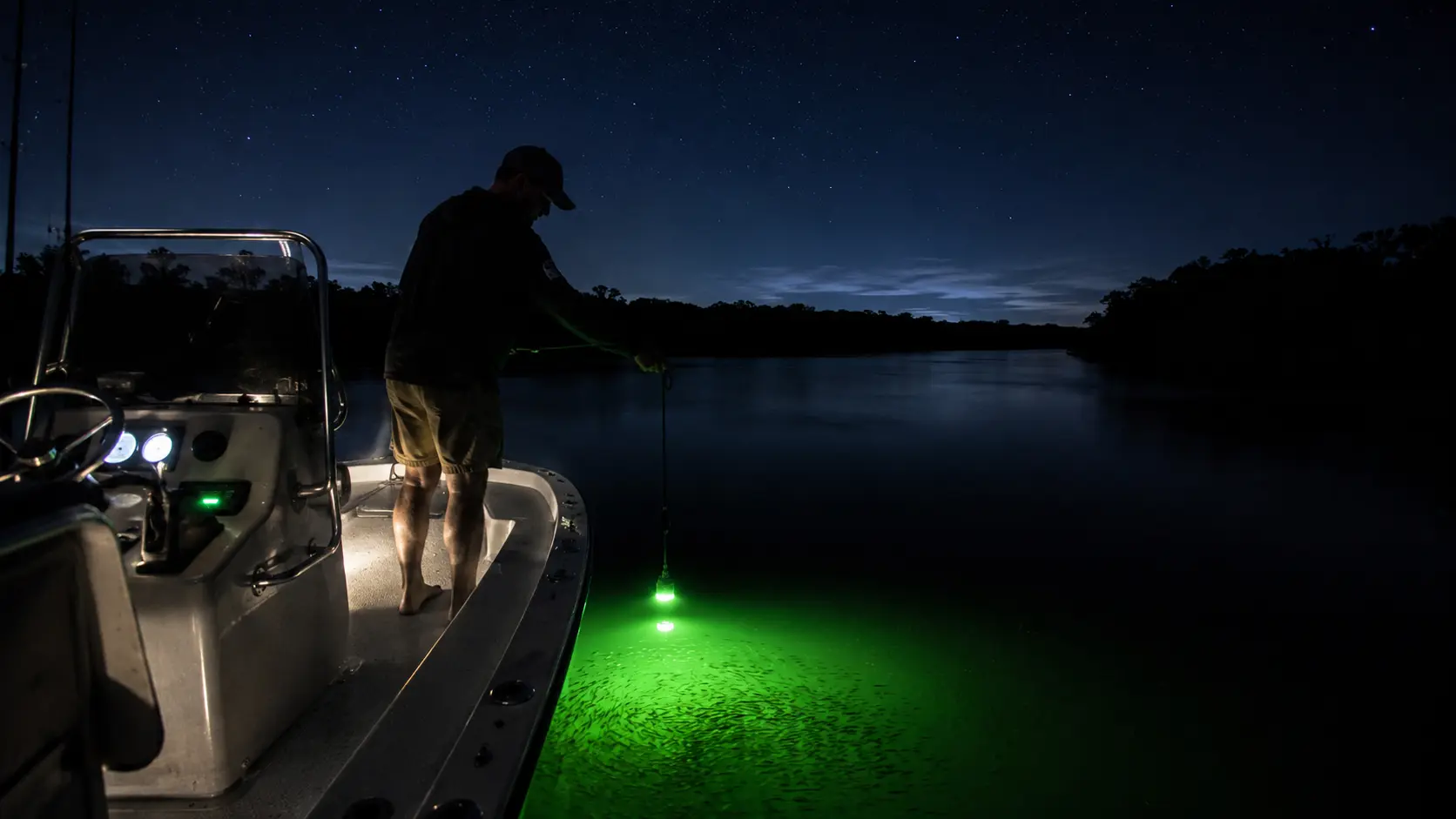
Underwater vs. above-water positioning is not a preference, it is the difference between success and failure. Submersible lights deployed below the surface create a 360-degree backlighting zone that shrimp approach calmly. Above-water lights shine down and cause light-sensitive species (brown and pink shrimp in particular) to dive toward the bottom to escape.
Always deploy your shrimping light below the surface, away from the boat, with the top of the light facing skyward. The water above your light must remain completely unlit, that is what draws shrimp upward and into net range.
Step 3 – Use Two Lights, Not One
One light attracts. Two lights manipulate. A single-light setup creates a point of attraction. A two-light setup creates a field, a corridor of light pressure that guides shrimp toward your net. For 2–3 anglers, two lights is the minimum for a productive shrimping operation. The larger the light field, the higher the shrimp density at the harvest zone.
- Single boat: position the boat horizontal (east/west), anchor bow and stern, deploy 1–2 lights on the south-facing side in tidal water.
- Dock: deploy lights at the correct depth for your water column, dock-edge surface light alone is not an effective shrimping strategy.
Step 4 – Set the Right Depth
Depth is one of the most misunderstood variables in how to set up fishing lights for shrimping. In warm summer months, shrimp hold slightly deeper as surface water temperatures rise. In cooler fall months, they rise closer to the surface. Start at 18–24 inches below the surface and adjust in 6-inch increments based on activity.
The MacDaddy Fishing Lights® patented flotation system holds your light at a fixed, repeatable depth, allowing you to dial in the exact position that is working and replicate it on every trip. Depth control is arguably the most technical part of how to set up fishing lights for shrimping, and it’s where most anglers lose consistency
Step 5 – Anchor the Light in Moving Water
In tidal water, an unanchored light drifts with the current, creating an inconsistent, moving target that disperses shrimp aggregations. A minimum 7–8 lb anchor attachment is required in strong tidal systems. MacDaddy’s patented anchoring hardware is designed specifically for tidal environments, keeping the light fixed and the light field stable throughout the entire fishing window.
Step 6 – Choose the Right Brightness and Color
Aim for 1,800–6,000 lumens after housing loss (retailers typically market LED strip lumens before the light is assembled, deduct 35–50% for real output). Green LED fishing lights are the strongest performer for Florida’s murky inshore waters. The MacDaddy system pairs green with a lower-lumen white strip for added visual depth.
For the MacDaddy Smart Light® Series, use the green or dual-color mode as your default setting. Activate the strobe mode when bait density causes a blackout, this breaks up the pod and restores your fishing window. Getting brightness and color right is a make-or-break variable in how to set up fishing lights for shrimping successfully.
Step 7 – Time Your Trip to the Tides
Shrimp move during the outgoing tide. The tide chart is your most important pre-trip planning tool. The productive window is the falling tide, plan to have your lights in the water and cycling before the outgoing tide begins. The first hour of incoming tide can also produce at the peak and end of the shrimping season, though shrimp tend to run smaller.
- Dusk: Deploy lights as daylight fades, shrimp become active as ambient light drops.
- Night: The falling tide is your primary window. A short falling tide equals a short night.
- Tide change: The best moment is at the end of the incoming tide, just as the outgoing begins.
Step 8 – Secure and Power Your Lights Safely
Tether all light cords to a cleat, rail, or battery bracket with a cable tie, losing a shrimping light overboard in a moving tide is a common and expensive mistake. For power, use a 675-crank-amp tractor or marine battery for lights under 6,000 lumens. The MacDaddy ULTRA Series requires a 1,000-crank-amp battery to run two lights at full power for an extended session.
Step 9 – Choose the Right Net
A dip net with a 3/8-inch mesh bag is the standard for night shrimping in Florida. Bring 4-inch cable ties to repair any rips mid-session, a small hole in the mesh can cost you dozens of shrimp per dip. Cast nets (14-foot maximum stretched length, per Florida FWC regulation) are used during daytime shrimping for white shrimp. All recreational shrimping requires a valid Florida saltwater fishing license.
Conclusion: Strategy Is What Separates Full Coolers from Empty Ones
Now that you know how to set up fishing lights for shrimping using Capt. Lee Noga’s proven system, you have the foundation for consistent, repeatable results. Depth control, current anchoring, two-light deployment, and tide timing work together as a system, not independently. The MacDaddy Fishing Lights® were engineered to make every one of these variables manageable, even in challenging Florida tidal conditions.
FAQs
u003cstrongu003eHow to set up fishing lights for shrimping?u003c/strongu003e
Choose tidal water with 10–15 feet of depth, deploy your light below the surface facing skyward, anchor it to hold a fixed position, and time your trip to the outgoing tide. Depth, anchoring, and timing work together as a system, skipping any one of them cuts your results significantly.
u003cstrongu003eHow deep should I set my shrimping light?u003c/strongu003e
Start at 18–24 inches below the surface and adjust in 6-inch increments based on activity. Shrimp hold slightly deeper in warm summer months and rise closer to the surface as water cools in fall.
u003cstrongu003eDo I need one light or two for shrimping?u003c/strongu003e
Two lights, if you’re running 2–3 anglers. A single light only creates a point of attraction; two lights create a corridor of light pressure that actively guides shrimp toward your net.
u003cstrongu003eWhat color light is best for shrimping?u003c/strongu003e
Green performs strongest in Florida’s murky inshore water. Pairing green with a lower-lumen white strip adds visual depth without sacrificing green’s penetration advantage.
u003cstrongu003eHow many lumens do I need for a shrimping light?u003c/strongu003e
Aim for 1,800–6,000 lumens of real output after housing loss. Retailers typically market LED strip lumens before assembly, deduct roughly 35–50% from the advertised number to get the true figure.
u003cstrongu003eWhen is the best time to go shrimping?u003c/strongu003e
The falling (outgoing) tide is the primary window, have your lights deployed and cycling before it begins. The last hour of the incoming tide, right before the tide turns, can also produce, especially near the start and end of shrimping season.
u003cstrongu003eHow much anchor weight do I need for a shrimping light in tidal water?u003c/strongu003e
A minimum of 7–8 pounds in strong tidal current. An unanchored light drifts with the current, which disperses the shrimp aggregation you’ve already built.
u003cstrongu003eWhat size net and mesh do I need for night shrimping?u003c/strongu003e
A dip net with 3/8-inch mesh is standard for Florida night shrimping. Bring extra 4-inch cable ties to repair mesh tears mid-session, a small hole can cost you a meaningful chunk of your catch.
u003cstrongu003eDo I need a license to go shrimping in Florida?u003c/strongu003e
Yes, recreational shrimping in Florida requires a valid saltwater fishing license, and cast nets used for daytime white shrimping are capped at 14 feet stretched length under FWC regulation.
u003cstrongu003eWhat causes a bait blackout when shrimping, and how do I fix it?u003c/strongu003e
A dense bait pod crowding the light blocks it from projecting outward. A strobe mode on a multi-mode light breaks up the pod and temporarily restores your fishing window until it regathers.
u003cstrongu003eShould I deploy my shrimping light above or below the water’s surface?u003c/strongu003e
Below the surface. Submersible deployment creates a 360-degree backlighting zone shrimp approach calmly; above-water light shining down causes light-sensitive species like brown and pink shrimp to dive away from it instead.
Our Store:
Shop – The MacDaddy Fishing Lights Online Store
Video Links:
View 60 Second Demo – MacDaddy Smart Light® ULTRA 8-Modes
View (1 hr) YouTube® Video – Stop Setting Your Lights Wrong
Related Articles:
Why More Excessive Lumens Kill Night Fishing Success
The NEW Argument: Headlight vs. Fishing Light. The Winner Is ….
Green vs. White vs. Dual Color Fishing Lights
Toy? Tool? Toolbox? What Fishing Light Do I buy?